
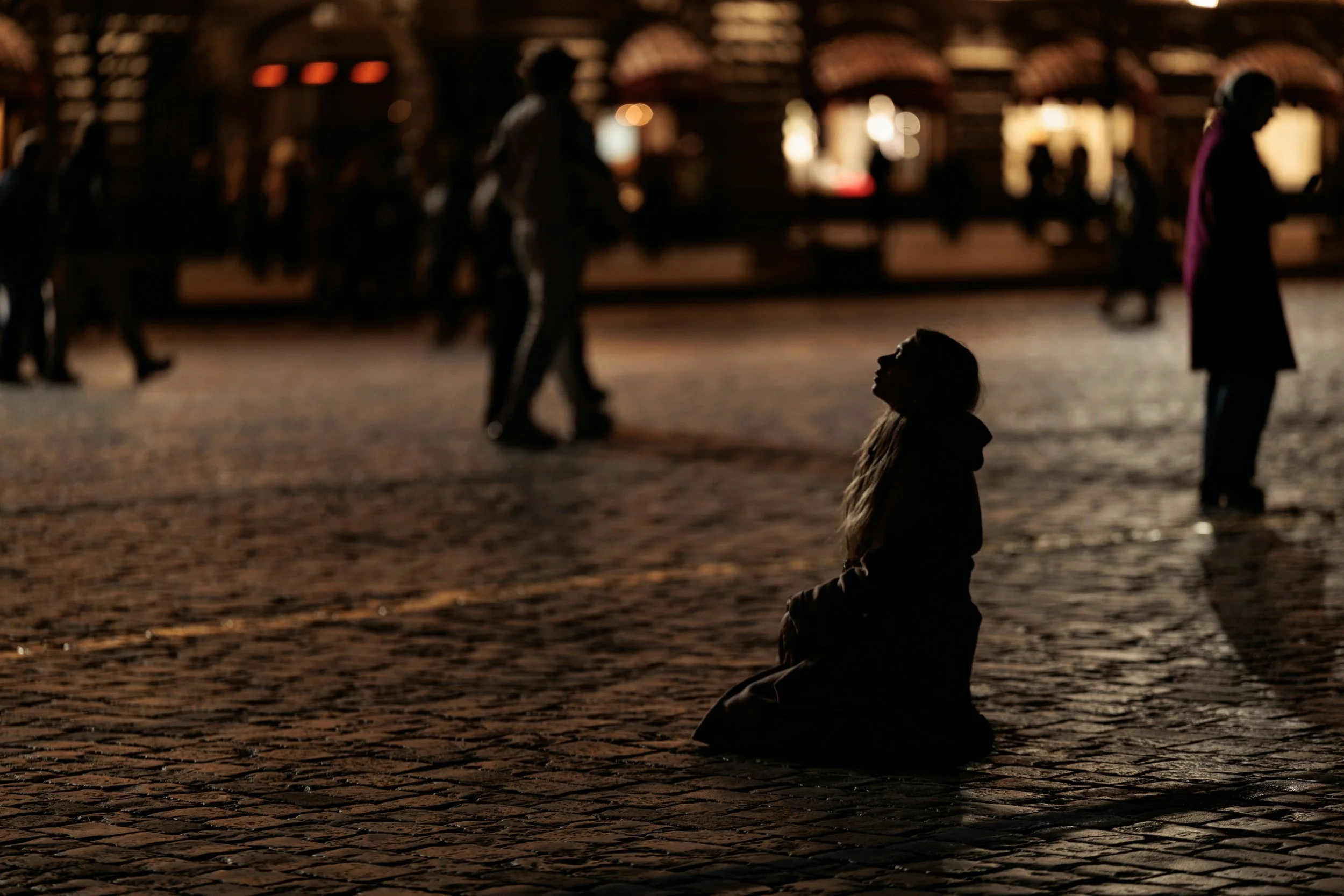
Someone says something to you on the street. A colleague makes a comment. You see a news segment that reduces your entire faith to a headline about violence. The moment passes. Everyone else moves on. But something in you does not. The mental health impact of Islamophobia is real, it is documented, and it is chronically underaddressed.
At Salam Space, we work with Muslim clients carrying exactly this kind of weight, the kind that is hard to name and harder to get taken seriously. This post is for them, and for anyone who has been told to simply let it go.
What Is Islamophobia, Really?
Islamophobia is not just about hate crimes, though those are part of it. It is a broader pattern of fear, hostility, and discrimination directed at people who are Muslim or perceived to be Muslim. It shows up in airports, job interviews, classrooms, hospitals, social media comments, and political speeches. It can be explicit and aggressive, or quiet and structural.
The definition adopted by the All-Party Parliamentary Group on British Muslims describes it as rooted in racism, a type of racism that targets expressions of Muslim-ness or perceived Muslim-ness. The key phrase here is “perceived Muslim-ness”. You do not have to be Muslim to experience Islamophobia. You just have to look like what someone has decided a Muslim looks like.
For many Muslims, that ambiguity is part of the exhaustion. The threat can come from anywhere. And it does not announce itself in advance.
The Numbers Are Not Reassuring
The scale of the problem is not abstract.
Recent ISPU polling found that 63% of American Muslims reported experiencing religious discrimination, with many facing at least one such incident every year going back to 2016. In the UK, Tell MAMA recorded a 165% rise in verified Islamophobic incidents since 2022, and 2024 itself produced the highest number of cases in the organisation's history.
The Institute for Social Policy and Understanding found in 2025 that Islamophobia is a structural determinant of mental health for Muslims in the United States. This is not a soft claim. It means that discrimination is baked into the environment in ways that predictably worsen mental health outcomes, independent of individual circumstances.
And yet, in most mainstream mental health conversations, the psychological cost of living as a Muslim in a climate of rising anti-Muslim sentiment is barely mentioned.
Are you carrying the weight of discrimination with nowhere to put it? Salam Space offers confidential, faith-informed therapy for Muslim clients.
BOOK A SESSION
Ready to take the first step?
Confidential, culturally sensitive therapy — available online.
How Islamophobia Gets Under the Skin
The mental health impact of Islamophobia is not limited to the moments when something explicitly bad happens. The chronic, ambient experience of living in a society where your faith is regularly treated as a threat has its own psychological cost.
Research consistently links the experience of Islamophobia and mental health outcomes including higher rates of depression, anxiety, post-traumatic stress symptoms, and diminished self-worth. Numerous studies since 9/11 connect high rates of discrimination experienced by the Muslim community to higher rates of depression specifically.
Here is what that actually looks like day to day:
Hypervigilance. A constant low-level alertness in public spaces. Scanning for potential threats. Modifying your behaviour to appear less visibly Muslim. This is exhausting in a way that is difficult to convey to people who have never had to do it.
Identity concealment. Removing a hijab. Changing the pronunciation of your name. Avoiding mentioning your faith in professional settings. Each of these small acts of self-erasure carries a psychological cost.
Internalised shame. When the world consistently treats your identity as a problem, some of that message gets absorbed. Many Muslims who have experienced discrimination report feelings of shame about their faith, their appearance, or their name, even when they intellectually reject that shame.
Grief and anger without outlet. When discriminatory incidents happen, there is often nowhere for the emotional response to go. Reporting is frequently futile. Being believed is not guaranteed. The feelings get suppressed, and suppressed feelings have a way of showing up elsewhere.
The Unique Burden of Visible Muslims
Not all Muslims experience Islamophobia in the same way. Visibly Muslim individuals, particularly women who wear hijab or men with beards, face a different and in many ways more intense version of the problem. They cannot opt out of visibility. They cannot manage how they are perceived by changing what they wear without a significant spiritual and personal cost.
Research from the UK found that racially motivated riots in 2024 had a devastating long-term impact on the mental and physical health of affected communities, with Muslim women and girls disproportionately affected. In a British Islamic Medical Association survey taken in the aftermath of those riots, more than 80% of Muslim healthcare professionals reported making significant lifestyle changes, including avoiding certain public spaces or modes of transport, because of fear.
The weight carried by visibly Muslim people is not theoretical. It restructures their daily lives in ways that accumulate, quietly and relentlessly, into something that looks a great deal like trauma.
When Discrimination Shapes How You Access Care
Here is one of the cruellest ironies of the mental health impact of Islamophobia: it makes people less likely to seek the very care they need.
A 2024 study of 325 Muslim Americans who had used psychological services found that 56% were worried about provider bias and 57% were worried about being misunderstood. That study, by the researcher's own account, is still under review rather than published, so it is worth reading as an early, single-author signal rather than settled consensus, though it lines up with a broader, published pattern of care-avoidance research. Following the 2017 travel ban, research from the Yale School of Public Health found that many Muslim Americans skipped their primary care appointments altogether, while emergency room visits went up. Avoidance of care in the face of discrimination is a well-documented and deeply rational response to a broken system.
When Muslims do access mental health support, they frequently encounter therapists who have no framework for understanding the specific stressors they face. A therapist who has not thought about how Islamophobia operates as a structural force, or who treats faith as irrelevant to the clinical picture, is not equipped to help a client process discrimination-related trauma.
This is not a small gap. It is a fundamental mismatch that causes many Muslim clients to disengage from care entirely, which confirms their prior belief that therapy was not for people like them.
You should not have to explain Islamophobia to your therapist before they can help you. At Salam Space, we already understand the context.
READY TO FEEL UNDERSTOOD?
Faith-centered therapy, personalized for your journey.
What Helps: Faith-Informed Therapy and Islamophobia
Therapy that addresses the mental health impact of Islamophobia effectively needs to hold several things at once. It needs to validate the reality of discrimination without catastrophising. It needs to make space for grief, anger, and fear without pathologising them. And it needs to work within an Islamic framework, treating faith as a resource rather than a complication.
In practice, effective support for Muslims navigating discrimination-related mental health impacts might include:
Validation and naming. Simply having a therapist acknowledge that what you experienced was real, was wrong, and has psychological consequences is more powerful than it sounds. Many Muslim clients have spent years having their experiences minimised.
Trauma-informed approaches. Where discrimination has created trauma responses, approaches like trauma-focused CBT or EMDR can help process the specific incidents and reduce the hypervigilance they leave behind.
Identity affirmation. Reconnecting with Muslim identity as a source of strength, not only as a site of vulnerability, is a meaningful part of recovery from discrimination-related harm. Faith-informed therapy supports this rather than working around it.
Community and collective processing. Isolation amplifies the impact of discrimination. Therapy that helps clients build or reconnect with community, whether through mosque networks, Muslim professional groups, or peer support, addresses one of the key mechanisms through which Islamophobia does its damage.
Your Pain Is Not an Overreaction
The psychological weight of Islamophobia is real, cumulative, and largely invisible to the people around those who carry it. It does not resolve on its own. It does not go away because someone tells you to focus on the positive or to make du'a and move on. It is a mental health issue, and it deserves to be treated as one.
If you are a Muslim who has been affected by discrimination, religious prejudice, or the ambient stress of living in a climate of anti-Muslim sentiment, your experience is valid. Your pain is not an overreaction. And you deserve support from someone who understands the full picture.
Salam Space exists for exactly this reason. We would be honoured to be part of your healing.
Frequently Asked Questions
Is Islamophobia a recognised cause of mental health problems?
Yes. Multiple peer-reviewed studies identify Islamophobia as a structural determinant of mental health. It is associated with higher rates of depression, anxiety, and trauma symptoms in Muslim populations.
Can someone experience Islamophobia even if they aren't Muslim?
Yes. Islamophobia targets perceived Muslim-ness, not confirmed religious identity. Sikh, Hindu, and Christian people who are mistaken for Muslim based on appearance, name, or dress regularly experience the same discrimination and carry a similar psychological cost, even though the label technically describes bias against Muslims specifically.
What if the discrimination I experienced seems minor? Does it still count?
Yes. The cumulative effect of repeated small incidents, what researchers call microaggressions, is well-documented and can be as damaging as single severe events. There is no minimum threshold for your experience to be worth addressing.
Can therapy actually help with something that is happening in the outside world?
Therapy cannot stop discrimination from happening. But it can help you process the psychological impact, build resilience, manage hypervigilance, and reconnect with your sense of self and faith. That is meaningful, even when the external problem remains.
What if my therapist does not understand Islamophobia?
This is a valid concern. A therapist unfamiliar with the Muslim experience may inadvertently minimise or misframe what you share. Salam Space therapists work specifically with Muslim clients and understand the context you are bringing into the room.
Is it normal to feel angry after experiencing discrimination?
Completely. Anger is an appropriate response to injustice. A good therapist will help you understand and work with that anger, not suppress it.
Can discrimination cause PTSD?
Yes. Research shows that experiences of discrimination, particularly violent or severe incidents, can meet the criteria for post-traumatic stress. Even repeated lower-level discrimination can produce trauma-like symptoms over time.
