
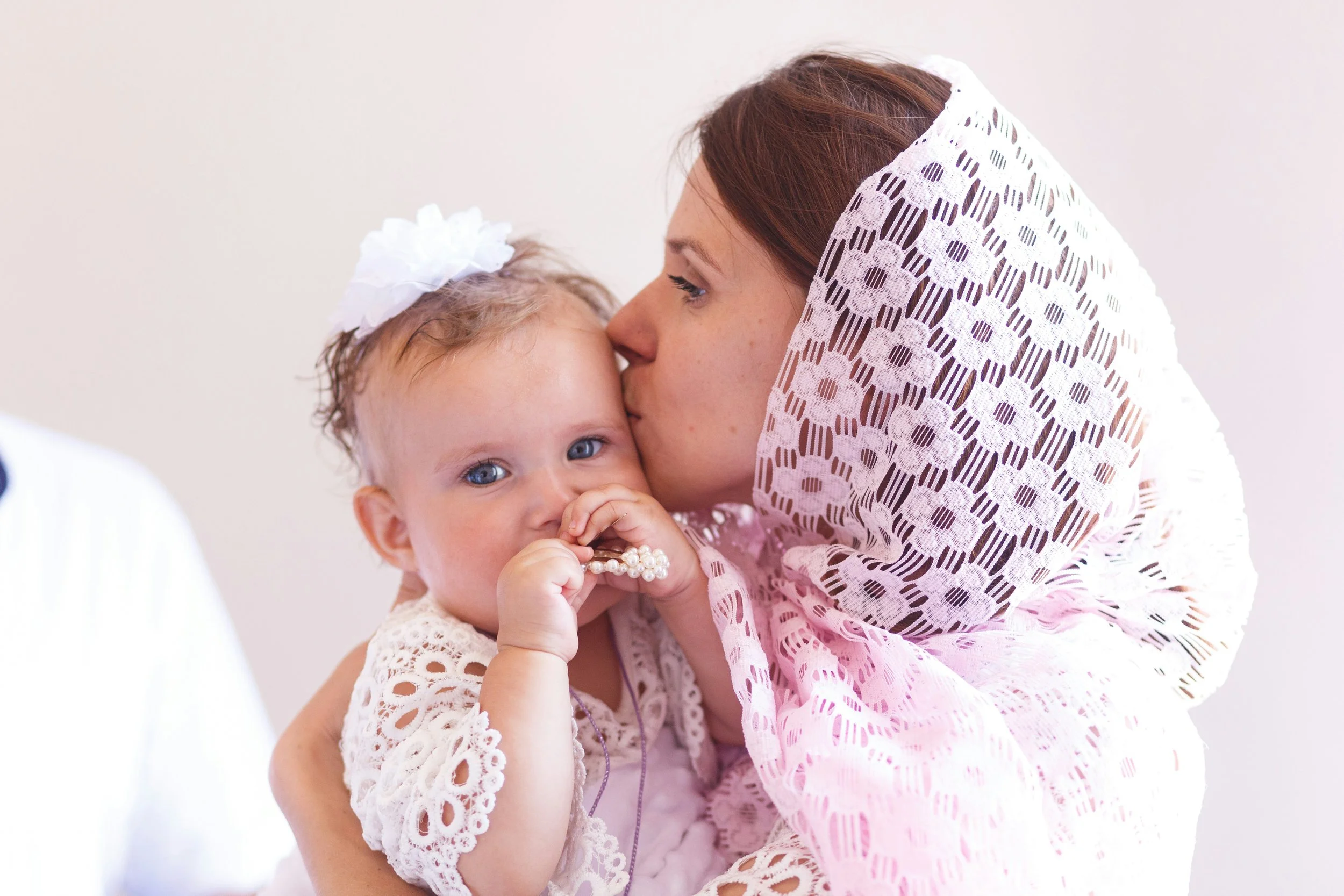
Motherhood is supposed to feel like a blessing, and for many Muslim women, it is. But for a significant number, the weeks and months after birth are marked not by joy but by a heaviness that is hard to explain and even harder to admit. Postpartum depression in Muslim mothers is more common than the community acknowledges, and the silence around it is costing women their wellbeing, their relationships, and sometimes their sense of self.
This post explores what postpartum depression really is, why Muslim mothers' mental health is particularly at risk of being neglected, and how the right support, grounded in both clinical expertise and Islamic values, can make all the difference. If you are looking for a therapist who truly understands the Muslim experience, Salam Space is here for you.
What Is Postpartum Depression and What It Is Not
Let's start by being clear about what postpartum depression (PPD) actually is, because one of the biggest barriers to Muslim women getting help is not understanding what they are experiencing.
It is not just “baby blues.” Baby blues, the tearfulness, emotional swings, and exhaustion that many new mothers feel in the first week or two after birth, are normal and usually pass on their own. Postpartum depression is different. It is a clinical mental health condition that can begin any time in the first year after birth and does not resolve without support.
It is not a character flaw. PPD is not caused by being a bad mother, lacking faith, or failing to be grateful enough. It is caused by a complex combination of hormonal changes, sleep deprivation, physical recovery from birth, and psychological and social pressures. Any woman can experience it.
It is not a sign of weak iman. This point bears repeating because it is the one that keeps Muslim mothers trapped in shame for the longest. Postpartum depression and faith are not in conflict. Struggling mentally after giving birth is not a spiritual failing. It is a medical reality. And Islam, as we will explore, never asked women to suffer in silence.
How Common Is PPD in Muslim Women?
Postpartum depression affects women across all cultures, faiths, and socioeconomic backgrounds. Globally, estimates suggest that between 10% and 20% of new mothers experience it.
In Muslim-majority contexts, the picture is often worse. A 2025 narrative review of postpartum depression studies in Saudi Arabia found screening rates ranging from about 5% to as high as 76% across different studies, depending on the screening tool and cutoff used. Even accounting for that wide range, it consistently points in one direction: elevated rates of postpartum depression, particularly among women who are immigrants, who lack family support networks, or who face cultural pressure to present as coping well.
Yet despite these numbers, the vast majority of Muslim mothers with PPD never seek professional help. They push through. They pray harder. They tell themselves, or are told by well-meaning relatives, that this is just the difficulty of new motherhood, and that gratitude and sabr will see them through. Muslim women's postpartum support, in too many communities, simply does not exist in any meaningful form.
Sometimes they do get through. But at what cost?
Why Muslim Mothers Suffer in Silence
Several overlapping forces keep Muslim mothers from speaking up about postpartum depression.
Community pressure to be joyful. In most Muslim cultures, the birth of a child, particularly a first child, is a communal celebration. Visitors come bearing gifts and congratulations. The new mother is expected to be radiant and grateful. Admitting that she is depressed in the middle of all that joy feels almost like a betrayal of the occasion.
Fear of being seen as ungrateful to Allah. This is one of the most painful traps Muslim women describe: the belief that feeling depressed after receiving the “blessing” of a child means they are somehow not grateful enough to Allah. It is not a logical conclusion. Shame is rarely logical, and it is almost never kind.
Family minimisation. Many Muslim mothers who have tried to open up about how they are feeling have been met with responses like “you just need more sleep,” “this is normal, every woman goes through it,” or “make du'a, you'll feel better.” These responses are usually well-intentioned. They are also deeply harmful, because they communicate that the mother's suffering is not serious enough to warrant real attention.
Stigma around mental health and medication. In many Muslim communities, there remains a significant stigma around psychiatric medication in particular. A Muslim mother who is told by a doctor that she might benefit from antidepressants is often met with family resistance: “you don't need chemicals, you have your faith.” This stigma is not uniquely Islamic, but the religious framing of it makes it harder to push back against.
Lack of culturally competent care. When Muslim mothers do seek help, they often encounter healthcare providers who do not understand their cultural context, their faith, or the specific pressures they face. Feeling misunderstood in a clinical setting, with their religious practice treated as irrelevant or their family structure pathologised, causes many to disengage entirely.
The Nifas Period: Islam Already Knew Mothers Need Rest
Here is something worth sitting with: over 1,400 years ago, Islam established a framework of postpartum care that modern science is still catching up to.
The nifas period, the postpartum phase that lasts up to 40 days following birth, is a time during which a Muslim mother is exempted from obligatory prayers and fasting. She is given a period of physical and spiritual rest. The scholarly consensus, drawn from the practice of the Prophet's companions, is that this time is intended as a mercy, a recognition that the mother's body, mind, and soul need space to recover. Nifas and mental health are deeply connected. The period is a divine acknowledgement that postpartum recovery is real and worthy of protection.
In many traditional Muslim cultures, this 40-day period was supported by a community of women, mothers, aunties, neighbours, who would cook, clean, and care for the new mother so she could focus entirely on healing and bonding with her baby. It was understood, without needing to name it, that a new mother is vulnerable.
That tradition is not wrong. It is, in fact, exactly right. What has gone wrong is that in many modern Muslim families, particularly those living as immigrants far from extended family, the support structure has disappeared while the expectation to cope has remained.
The religious wisdom is intact. The community infrastructure to live it out has, in many cases, collapsed. And the gap between the two is where postpartum depression quietly grows.
Signs of Postpartum Depression to Watch For
Postpartum depression does not always look like sadness. In fact, it often does not, which is part of why it goes unrecognised for so long in Muslim communities where outward emotional expression is already discouraged.
Watch for the following signs, whether in yourself or someone you care about:
Emotional: persistent sadness or emptiness that does not lift, feeling detached from your baby, going through the motions of care without feeling connected, irritability or anger that feels disproportionate, or feeling like a failure as a mother or as a Muslim.
Cognitive: difficulty concentrating or making decisions, and intrusive thoughts, particularly frightening thoughts about harming yourself or your baby. These thoughts, though distressing, are a symptom of PPD, not a reflection of your character or your motherhood.
Physical: profound exhaustion that sleep does not relieve, changes in appetite in either direction, and physical aches without clear cause.
Spiritual: feeling cut off from Allah, finding it hard to make du'a or feel any comfort from worship, and a sense of spiritual numbness or emptiness. This does not mean your faith has left you. It means your mind needs care.
Behavioural: withdrawing from family and friends, difficulty managing daily tasks that would normally feel manageable, and crying frequently and without knowing why.
If you recognise several of these signs in yourself and they have persisted for more than two weeks, please do not wait. Reach out for support.
READY TO FEEL UNDERSTOOD?
Faith-centered therapy, personalized for your journey.
The Immigrant and Isolated Muslim Mother
A particular word is needed here for Muslim mothers who are navigating the postpartum period far from their families.
Research on immigrant mothers and postpartum depression risk has found that lack of social support is one of the strongest predictors of PPD, particularly in the first two years after moving to a new country. That research looked at immigrant women broadly rather than Muslim women specifically, but the pattern maps closely onto what many immigrant Muslim mothers describe. The 40-day communal support system that is baked into Islamic tradition presupposes a network of extended family nearby. When a woman gives birth in a country where she has no mother to lean on, no aunties to cook her shorba, no sisters to hold the baby while she sleeps, that absence is not just logistical. It is felt in the body and the soul.
Add to this the stress of navigating an unfamiliar healthcare system, the cultural and language barriers that can make asking for help feel almost impossible, and the profound loneliness that many immigrant women experience even within their own marriages, and you have a perfect storm for postpartum depression to take hold.
If this is you, if you are reading this as a Muslim mother who is thousands of miles from home, trying to do this alone: you are not weak for struggling. You are doing something extraordinarily hard. And you deserve support.
What Islam Actually Says About Maternal Wellbeing
Islam does not ask mothers to suffer. This cannot be stated often enough.
The Quran speaks of the weight of motherhood with profound respect: “And We have enjoined upon man [care] for his parents. His mother carried him, [increasing her] in weakness upon weakness” (Surah Luqman, 31:14). The hardship of bearing and raising children is acknowledged directly in the sacred text, without being dismissed or minimised.
The Prophet (peace be upon him) placed immense honour on mothers. When asked who deserves a person's best companionship, he replied, “Your mother,” three times before mentioning the father (Sahih al-Bukhari 5971). This is not merely a statement about filial duty. It is a recognition of what mothers carry.
Islamic tradition also clearly supports seeking treatment for illness. The Prophet (peace be upon him) said, “Make use of medical treatment, for Allah has not made a disease without appointing a remedy for it” (Sunan Abi Dawud 3855). Postpartum depression is an illness. It has remedies, both professional and spiritual. Seeking those remedies is not a failure of faith. It is an act of obedience to the Prophetic instruction to care for the body and mind Allah has entrusted to you.
Your mental health is an amanah, a trust from Allah. Neglecting it is not piety.
How Faith-Centred Therapy Helps
Standard therapy can help with postpartum depression in Muslim mothers. But faith-based therapy for new mothers is often significantly more effective because it speaks to the whole person.
Faith-centred therapy for the postpartum period might include:
Validating the spiritual dimension of suffering. A faith-informed therapist understands that a Muslim mother's disconnection from worship during PPD is a symptom of her illness, not evidence of spiritual failure. Helping her understand this can lift an enormous weight of guilt.
Working with, not against, Islamic frameworks. Rather than positioning therapy as an alternative to faith, a skilled Muslim therapist draws on Islamic concepts like tawakkul, sabr, and rahma as genuine therapeutic resources. The goal is integration, not replacement.
Addressing the guilt and shame specific to Muslim mothers. The belief that good Muslim mothers should be joyful and grateful at all times is a culturally constructed myth, not a Quranic obligation. Therapy can gently challenge this narrative and replace it with something more honest and more merciful.
Practical coping tools. Evidence-based approaches like Cognitive Behavioural Therapy (CBT) help mothers identify and reframe unhelpful thought patterns. Combined with Islamic mindfulness practices such as dhikr and structured du'a, these tools can be genuinely transformative.
A female therapist option. Many Muslim women feel more comfortable working with a Muslim therapist for women, and that preference is completely valid. At Salam Space, we understand this and work to accommodate it.
Postpartum depression is treatable. With the right support, clinical, spiritual, and communal, mothers recover. They reconnect with their babies, with their families, with their faith, and with themselves.
You Are Meant to Be Cared For
If you are a Muslim mother who is struggling right now, here is what we want you to know.
What you are feeling is not your fault. It is not a reflection of your love for your baby. It is not a sign that you are a bad Muslim or a bad mother. It is an illness, and illnesses deserve treatment, not shame.
You do not need to have it all together before you seek help. You do not need to be at rock bottom. You do not need anyone's permission.
At Salam Space, we offer a safe, confidential, and culturally grounded space where Muslim mothers can speak honestly about what they are experiencing, without fear of judgment, without being made to feel their faith is a complication, and without being told to simply pray more.
BOOK A SESSION
Ready to take the first step?
Confidential, culturally sensitive therapy — available online.
If any part of what you have read here resonates with you, we invite you to take the next step. Book a session with a Salam Space therapist today. The first conversation might be the most important one you have.
Postpartum depression in Muslim mothers is not rare, not shameful, and not a sign of weak faith. It is a real, treatable condition that too many Muslim mothers are navigating alone, in silence, because their communities have not yet built the language or the infrastructure to support maternal mental health properly.
Islam has always honoured the mother. The nifas period, the Quranic acknowledgement of the weight of motherhood, the Prophetic instruction to seek remedies for illness, all of it points in one direction: you are meant to be cared for, not just carry everyone else.
If you are a Muslim mother in pain, please reach out. And if you love a Muslim mother who is struggling, check on her. Not just once. Really check on her.
Frequently Asked Questions
Is postpartum depression a sign of weak faith?
No. Postpartum depression is a clinical mental health condition caused by hormonal changes, sleep deprivation, physical recovery from birth, and psychological stressors. It has nothing to do with the strength or sincerity of a person's faith.
How long does postpartum depression last?
Without treatment, PPD can persist for months or even years. With appropriate support, whether therapy, medication, or both, most women recover significantly. The earlier it is addressed, the better the outcome.
Can I take medication for PPD as a Muslim?
Yes. Islam permits and encourages seeking medical treatment for illness. Many antidepressants are safe to take while breastfeeding and can be discussed with a doctor. The decision about medication should be made with a qualified healthcare provider, not based on cultural stigma.
I feel detached from my baby. Does that make me a bad mother?
Absolutely not. Emotional detachment from your baby is a recognised symptom of postpartum depression, not a reflection of your love or your capabilities as a mother. With proper support, this feeling resolves and it does not define the relationship you will have with your child.
What if my husband or in-laws don't believe in therapy?
This is a common and painful barrier. You do not need your family's permission to access therapy. Your mental health is your responsibility to Allah, and caring for it is a right Islam has given you. Salam Space sessions are confidential, and no one needs to know you are attending unless you choose to tell them.
How is Salam Space different from regular therapy?
Salam Space offers culturally and spiritually informed care specifically for Muslim clients. Our therapists understand the Islamic context, the cultural pressures, and the specific experiences that Muslim mothers face. You will not have to explain your faith, defend your values, or navigate a secular framework that doesn't fit.
Can I come to therapy while I'm still in the nifas period?
Yes. Therapy is not a physical activity that would be restricted during the postpartum period. It is a form of care for your mind and soul, and it can begin at any point.
