
Everyone at the wedding has a version of the question. An aunt asks over dessert. A cousin asks while taking a selfie. A grandmother asks without even really asking, just a look and a sigh. Months later, no one remembers which wedding it was, just that the question was there again.
At Salam Space, we talk to single Muslims who are not struggling with the idea of marriage itself, but with the relentless pressure surrounding it, and what that pressure has done to how they see themselves. This post is about naming that honestly.
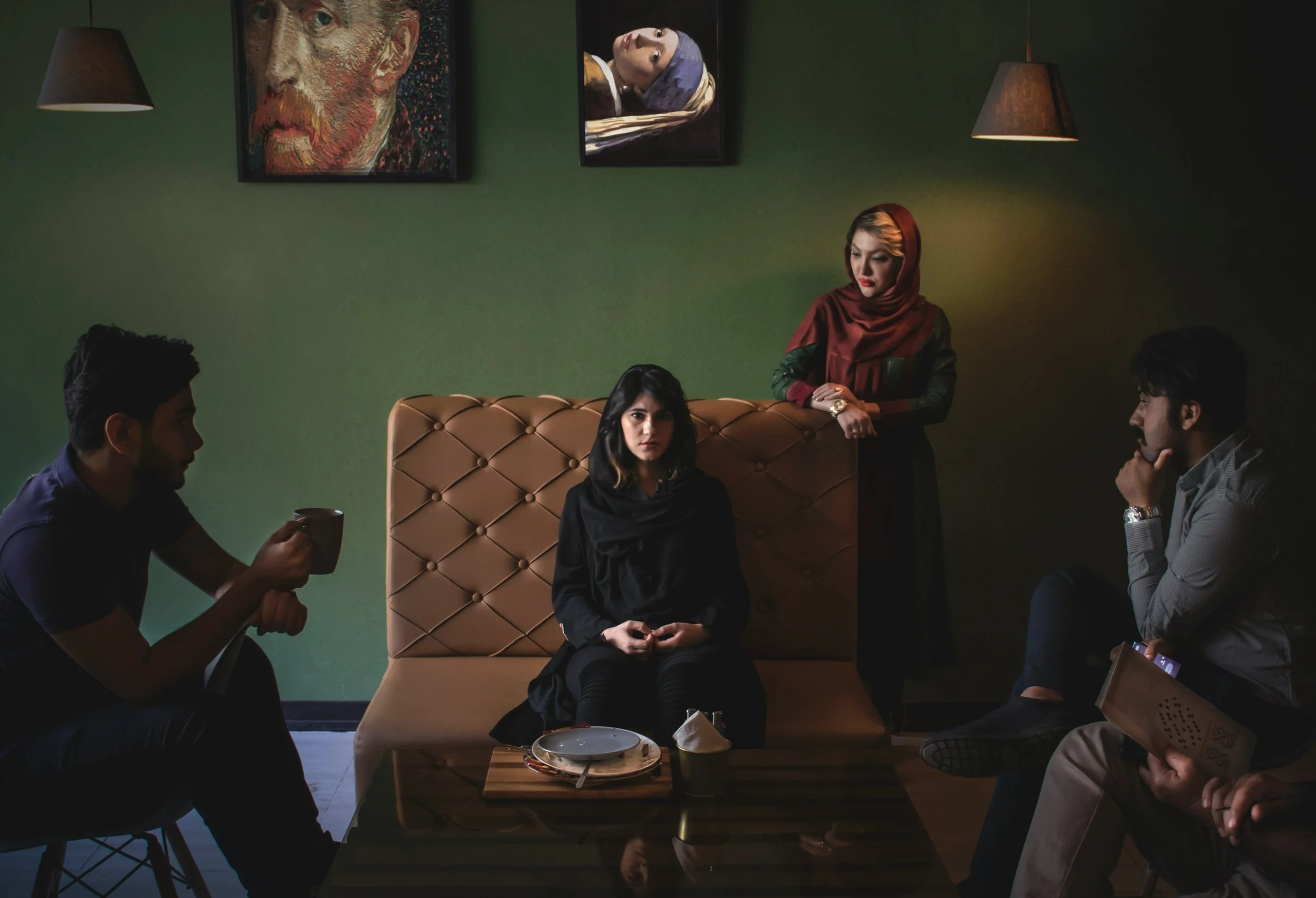
The Question That Is Never Just a Question
‘When are you getting married?’ sounds like small talk. For the person hearing it for the hundredth time, it rarely feels that way.
Research on delayed marriage backs this up, with a twist that matters. A 2025 study of 210 adults in Pakistan, ages 30 to 45, found that people whose marriage was delayed involuntarily, not by their own choice, reported significantly higher hopelessness, lower life satisfaction, and lower psychological wellbeing than those who had chosen to delay marriage voluntarily. In other words, it is not singleness itself driving the distress. It is the lack of control, the sense that this is happening to you rather than being chosen by you, often made worse by exactly the kind of external pressure described below.
What makes this particular kind of pressure so corrosive is its constancy. It is not a single difficult conversation. It is a recurring, almost ritualised event, woven into family gatherings, religious occasions, and casual catch-ups, where a person’s relationship status becomes the primary lens through which their entire life is evaluated.
Why This Hits Differently for Muslims
Marriage holds a particular significance in Islam that is genuinely meaningful. It is described in the Quran as a source of comfort, love, and mercy between spouses, and in one hadith the Prophet Muhammad, peace be upon him, is reported to have said that whoever marries has fulfilled half of the religion. This is not, in itself, the problem.
The problem is what happens when a genuinely beautiful religious and personal milestone becomes a community-wide scoreboard, something that other people feel entitled to comment on, question, and use as the measure of a person’s life progress, regardless of that person’s actual circumstances, efforts, or wishes.
Marriage as identity completion. In many Muslim communities, an unmarried adult past their twenties can be subtly or not so subtly treated as incomplete, as though their life has not really started yet. The belief that real struggle, or in this case an unfinished life, doesn’t happen to ‘good’ Muslims, regardless of what else they have built, achieved, or experienced.
Marriage as family project. Marriage is often treated as a family achievement, not just a personal one. This means that a person’s singleness can be experienced by their parents and extended family as a kind of unfinished family business, which adds a layer of guilt to the pressure the individual already feels.
The community as audience. Weddings, religious gatherings, and family events become venues where singleness is, implicitly or explicitly, on display. The same questions, the same knowing looks, the same well-meaning suggestions, repeated at every occasion.
Gendered timelines. The pressure often intensifies with age for women in particular, with a narrative that frames a woman’s marriageability as having an expiration date, language that shapes how many single Muslim women experience their own worth as they get older.
You may also like: Breaking the Silence: Muslim Mental Health Stigma
What This Pressure Actually Does to Mental Health
The mental health impact of chronic marriage pressure is not abstract. It shows up in concrete, recognisable ways for many single Muslims.
Anticipatory anxiety before social events. Knowing that a family gathering or wedding will likely include questions about your relationship status can create genuine dread well before the event itself, sometimes leading people to avoid community events altogether.
A sense of being perpetually behind. Comparing your own timeline to siblings, cousins, or peers who have married can create a persistent feeling of falling behind in life, even in areas that have nothing to do with marriage.
Conflation of self-worth with marital status. Over time, repeated messaging that marriage is the marker of a successful life can become internalised, so that a person’s sense of their own value becomes tied to something largely outside their control.
Strain in family relationships. Parents who raise the topic frequently, sometimes out of genuine love and worry, can inadvertently create distance in the relationship, with the adult child avoiding calls or visits specifically to avoid the conversation, a dynamic that often comes down to setting a boundary without it turning into a rupture.
Rushed or pressured decisions. In some cases, the weight of this pressure leads people to pursue relationships or marriages they are not genuinely ready for, simply to relieve the social and emotional burden.
None of this requires a diagnosable crisis to be worth taking seriously. A person can be functioning well at work, maintaining friendships, and still be quietly exhausted by the specific, recurring weight of this one area of life being treated as unfinished business by everyone around them.
READY TO FEEL UNDERSTOOD?
Faith-centered therapy, personalized for your journey.
When the Pain Isn’t Just the Question, It’s the Process
For some single Muslims, the harder part is not the question at a wedding, it is the actual process of being introduced to potential matches. A rishta meeting, where a prospective match and often their entire family sit across from you and, implicitly or explicitly, evaluate you, can feel less like getting to know someone and more like an audition.
A counselor who works specifically with this experience describes something close to its own kind of anxiety: the dread leading up to a meeting, the specific sting of being rejected over something as surface-level as height, complexion, or weight, and the particular cruelty of hearing that feedback secondhand, relayed by a parent or aunt rather than said directly. None of that is a sign of being too sensitive. It is a reasonable response to a genuinely dehumanising process.
If this part of the experience, not just the surrounding questions, is where the weight is sitting for you, that is worth naming directly, including with a therapist, rather than folding it into the broader category of ‘marriage pressure’ and hoping it resolves on its own.
There is also a quieter version of this strain that does not involve a single bad meeting: finding out, after the fact, that a family member has already shared your details with a matchmaker, a relative, or a family friend without asking first. Even when it comes from love and good intentions, learning that your search is being actively run by other people, sometimes before you have agreed to be looked for at all, can feel like a loss of basic say over your own life, not just an overly enthusiastic aunt. It is reasonable to ask to be consulted before, not informed after.
What Islam Actually Says About Timing and Worth
It is worth being clear about what Islam actually teaches here, because much of the pressure single Muslims experience is cultural rather than religious, even though it is often delivered in religious language.
The Quran describes marriage as one among many of Allah’s signs, something that exists for those for whom Allah has decreed it, at the time Allah has decreed it. Nowhere does Islamic teaching establish an age by which marriage must occur, nor does it tie a person’s spiritual standing or worth as a human being to their marital status.
The Prophet Muhammad, peace be upon him, himself did not marry until his mid-twenties, by most traditional accounts around 25, a notably late age by the standards of his time, and his first marriage was to Khadijah, who was considerably older than him, around 40 by the same traditional accounts. A person’s worth in Islam is tied to their character, their relationship with Allah, and how they treat others, not to their relationship status. The intense focus on marriage as the singular marker of a person’s value is a cultural overlay, not a religious truth.
Navigating Conversations Without Losing Yourself
Having a few calm responses ready can make these conversations much easier. Instead of being caught off guard every time someone asks about marriage, you can acknowledge the question and gently move on.
For example:
“Alhamdulillah, I’m still open to it if the right person comes along. How has your Ramadan been going?”
That’s enough. You don’t have to explain your timeline, defend your choices, or give everyone a status update.
It can also help to remember that the person asking may not be trying to hurt you. For many people, asking about marriage is simply a normal part of conversation. They might be asking out of genuine concern, habit, or even their own anxiety about your future.
Talking to Your Parents
If your parents bring it up often, it may help to have an honest conversation with them about how it affects you.
You could say:
“I know you ask because you care, but when it comes up every time we talk, it makes me want to call less, not more. Can we talk about other things too? I’ll tell you if anything changes.”
This makes it clear that you understand where they’re coming from while also explaining how the repeated questions are affecting you.
Setting Boundaries Around Feedback
The same approach can help when family members are involved in the search and pass along comments from potential matches or their families.
You can say:
“I’d rather hear it directly, even if it’s difficult, than hear it secondhand.”
Or, if a particular comment is hurtful:
“I’d rather not hear comments about my weight or appearance if they’re not necessary.”
Family members acting as go-betweens may not realize how painful a secondhand comment can feel. Something that might have been easier to process with context can feel much harsher when it is repeated to you without that context.
You’re allowed to decide what information you want brought to you and what you’d rather leave behind.

How Therapy Helps
Therapy for single Muslims navigating marriage pressure is rarely about ‘fixing’ singleness. It is about addressing the mental health impact of the pressure itself, regardless of what happens with marriage, through a faith-informed therapist who understands exactly where this pressure is coming from.
Separating self-worth from external timelines. Working through the internalised belief that marital status determines personal value, and rebuilding a sense of worth that is not contingent on something largely outside your control.
Processing family dynamics. Many single Muslims carry complicated feelings toward parents and family members around this topic. Therapy provides space to hold all of this honestly.
Addressing anxiety around social situations. Building genuine tools, through ongoing talk therapy, for managing the anticipatory anxiety that often accompanies family gatherings and community events.
Clarifying your own desires. Sometimes the noise of external pressure makes it hard to access what you yourself actually want regarding marriage, timing, and partnership. Therapy can help create space to hear your own voice on this.
Grounding in an accurate understanding of faith. For clients for whom this matters, exploring what Islam actually says about marriage, timing, and worth, separate from cultural expectations, can be a genuinely freeing part of the work.
Whatever format actually works for you, a weekly virtual session from anywhere in Texas or an in-person conversation in Austin or Houston, that support is available.
BOOK A SESSION
Ready to take the first step?
Confidential, culturally sensitive therapy — available online.
Not a Ring or a Date. Just You, As You Are.
Marriage pressure and mental health for single Muslims is a real and significant connection, even though it rarely gets discussed as a mental health issue in its own right. The constant questioning, the comparison, the conflation of marital status with personal worth, all of this takes a genuine toll.
Your worth was never tied to a ring or a date. Islam never said it was. If the pressure around this topic has been weighing on you, that weight is real, and it deserves attention.
Salam Space is here to talk through whatever this season looks like for you.
Related reading: Good Muslims Are Not Supposed to Get Addicted. So What Happens When They Do?
Frequently Asked Questions
Is it normal to feel anxious before family gatherings because of marriage questions?
Yes. This is an extremely common experience among single Muslims, and the anxiety is a reasonable response to a recurring social pressure, not an overreaction.
How do I respond to relatives who ask about marriage without it becoming a confrontation?
Brief, calm acknowledgements followed by a change of subject tend to work better than detailed explanations or defensiveness. Therapy can help you develop responses that feel authentic to you.
Does Islam actually require marriage by a certain age?
No. There is no age specified in Islamic teaching by which a person must marry. The pressure around timing is largely cultural, even when it is expressed using religious language.
I feel like something is wrong with me because I am not married yet. Is that a sign of a deeper issue?
This feeling is extremely common and is usually a result of internalised social messaging rather than a reflection of anything actually wrong with you. It is something therapy can help you work through directly.
My parents bring this up constantly and it is affecting our relationship. What can I do?
An honest, calm conversation about how the frequency of these conversations affects you can sometimes help. A therapist can help you think through how to approach this conversation.
Can therapy help even if I do want to get married eventually?
Yes. Wanting to get married and struggling with the pressure around it are not contradictory. Therapy can help you pursue what you want while reducing the anxiety and self-worth issues tied to external pressure.
Is it normal for the actual process of meeting potential matches to feel more painful than the waiting?
Yes. The rishta or matchmaking process itself, being evaluated, sometimes rejected over surface-level things, hearing feedback secondhand, is its own distinct source of distress for many single Muslims, separate from the general pressure of being asked about marriage. It deserves its own attention, not just a place inside the broader conversation.
