
In the middle of a seminar discussion about the news, your professor looks up and asks whether you, as a Muslim, would like to weigh in. Twenty heads turn. You have not done the reading on whatever this is. You did not choose to be the room’s expert on a billion and a half people. In about two seconds, you have to decide how to answer without saying too much or too little.
At Salam Space, we work with Muslim students who experience moments like this and may not always have space to name what they are costing them.
What Campus Islamophobia Can Look Like
Islamophobia on university campuses rarely looks like one dramatic incident. It can be a comment in a seminar that goes unchallenged, a professor who repeatedly mispronounces your name, a peer who seems surprised that your contribution was good, or a question you are asked simply because you are Muslim.
Each moment can seem small enough to dismiss. Together, they can become exhausting. Research has linked these experiences of discrimination to depression and anxiety.
Much of what Muslim students experience is not explicit hate. Researchers often describe it as everyday discrimination: subtle experiences that may be easy to dismiss individually but become significant when they form a pattern.
A 2025 qualitative study in the American Journal of Orthopsychiatry interviewed 13 Muslim American college students between 18 and 21, all from immigrant families. The students described chronic and pervasive discrimination, including microaggressions, stereotypes, and overt Islamophobia.
When Your Muslim Identity Is Visible
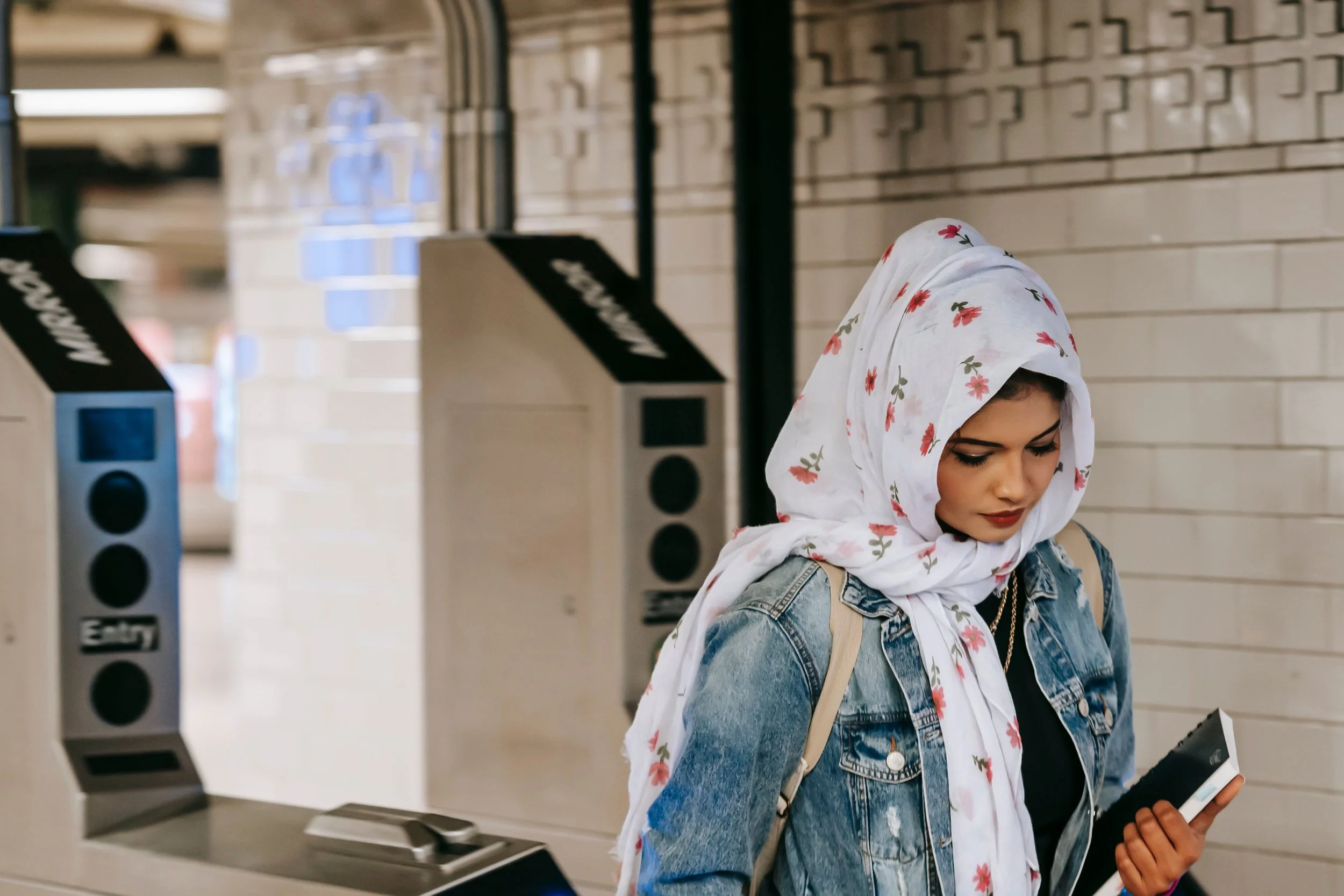
The same study highlighted the complexity of visible Muslim identity. For students who are visibly Muslim, particularly women who wear hijab, their identity can be immediately noticeable to others. This can invite assumptions, questions, and scrutiny that their peers do not experience.
But experiencing Islamophobia does not mean feeling ashamed of being Muslim. The students also described pride in their Muslim identity. Both can be true at once: pride in your faith, alongside the exhaustion of carrying it in an environment that does not always make room for it.
The Mental Health Impact Is Real and Documented
The clearest quantitative evidence comes from surveys of Muslim college students in the United States. A 2024 study in the Journal of Cross-Cultural Psychology (Hailes and Tummala-Narra) surveyed 128 racial-minority, immigrant-origin Muslim American college students and found that everyday experiences of discrimination were significantly associated with symptoms of both depression and anxiety. Campus racial climate, and perceived Islamophobia in the broader culture, were associated with anxiety, though not with depression in that sample.
Earlier work points the same way: a 2019 study by Lowe, Tineo and Young examined perceived discrimination and symptoms of major depression and generalized anxiety in Muslim American college students, and a 2021 study of 205 Muslim college students (Tineo and colleagues, American Journal of Orthopsychiatry) found that the link between perceived discrimination and depression and anxiety ran partly through acculturative stress, the strain of managing two worlds.
These are correlations from surveys, so they cannot prove that discrimination caused the symptoms, and the samples are modest. But they are consistent, and they name what many Muslim students already know from experience: that what happens on campus is not small. The cumulative experience of being regularly treated as different, other, or suspect has psychological weight.
For many Muslim students, the impact is compounded by the difficulty of naming it. Microaggressions are designed to be deniable. When you raise one, you risk being told you are oversensitive, that it was a joke, that they did not mean it that way. The burden of proof rests with you, and the effort of carrying that proof while also being a full-time student is itself a form of tax.
BOOK A SESSION
Ready to take the first step?
Confidential, culturally sensitive therapy — available online.
The Hypervigilance Tax
One of the most underrecognized costs of campus Islamophobia, in our clinical experience, is hypervigilance: the state of sustained alertness that Muslim students maintain as a protective response to an environment that has shown itself to be unpredictably unsafe. This is not paranoia. It is a learned response to real and repeated experiences. (This is what we observe in therapy, not a finding of the studies above.)
Hypervigilance is cognitively and emotionally expensive. It consumes mental bandwidth that would otherwise be available for the academic work that university is supposed to be about, and it keeps the nervous system in a low-level state of stress. Over months and years, that kind of sustained stress is exactly what students describe before they arrive in our office with anxiety or low mood.
The cruel irony is that Muslim students who are navigating campus Islamophobia are often simultaneously expected to perform the role of calm, articulate representative of Islam: to explain their faith graciously, to respond to intrusive questions with patience, and to demonstrate that they are not the threatening figure that the broader culture often makes of Muslims. This performance, on top of the hypervigilance, on top of the full demands of academic life, is an enormous amount to ask of a person.
The same pressure to perform shows up in how students manage their identity day to day, which we explore in our post on keeping your Muslim identity at a secular university.
When It Gets Worse: Overt Incidents
Beyond the everyday discrimination, some Muslim students experience overt incidents: explicit slurs, targeted harassment, vandalism of Islamic materials, or hostile interactions with faculty or administration. These incidents can be traumatic in a way that the cumulative microaggression experience is not, and they call for a different kind of response.
Some students are also affected by how their campus responds to protest, speech and political events connected to Muslim causes. CAIR's 2025 Hostile Campus Ratings Report rated 51 universities on institutional actions toward pro-Palestinian advocacy, using publicly available information and CAIR's own scoring framework, and found none rated "unhostile." It is an advocacy organization's rating of institutional behavior, not a survey of student mental health, and it should be read that way. But for students who have felt unsafe or unheard because of how their campus handled these issues, it names a real source of strain.
For students who experience overt incidents, knowing how to report, who to report to, and what to expect from that process is practically important, though the reporting process itself is often experienced as a further burden. For students who do not know whether their experience rises to the level of something that can be reported, a simple guideline: if it happened and it affected you, it is worth at minimum telling someone. A faith-informed therapist, a dean of students, or a trusted faculty member who has demonstrated care for Muslim students can help you assess the situation and decide next steps.
Protecting Your Mental Health While Navigating This
There is no way to perfectly insulate yourself from the effects of discrimination, however, here are a few tips that might help:
Having a clear internal narrative. Understanding that discrimination says something about the person discriminating and the systems that enable it, rather than about you or your faith, is a protective reframe that takes time to build. The Quran tells all of humanity that they were made into peoples and tribes so that they may know one another, and that the most noble in the sight of Allah is the most righteous among them (Quran 49:13). Your worth is not set by anyone's assumptions about you.
Building community intentionally. The MSA, the mosque, and a small circle of Muslim peers who understand your experience are worth prioritizing. They will not erase the effect of discrimination, but they give you somewhere to be understood.
Naming what is happening, at least to yourself. The deniability of microaggressions makes it easy to talk yourself out of your own experience. Having language for what is happening, and a space to use that language honestly, matters.
Knowing your rights on campus. Most universities have policies against religious discrimination, usually enforced through a dean of students, a bias response team, or an office of equity or civil rights. Knowing what those are and who enforces them gives you more options when incidents occur.
Accessing support before you are in crisis. In our experience, support is usually easier to use when you reach for it at the point of "this is getting to me" rather than waiting until you are not coping at all. That is a clinical impression, not a research finding, but it matches what students tell us afterward.
Also read: MSA Burnout is Real. You Showed Up for Everyone Else. Who Is Showing Up for You?
How Therapy Helps
Therapy for Muslim students navigating campus Islamophobia is not about making you more comfortable with discrimination. It is about processing what you are carrying and building genuine resilience.
Processing specific incidents. Whether microaggressions or overt discrimination, having a space to name what happened, to feel the emotional response to it without performing okayness, and to be believed without having to justify your interpretation, is itself a form of care.
Reducing hypervigilance. Therapy can help Muslim students develop strategies for managing the state of sustained alertness that discrimination produces, including recognizing when it is active and building practices that allow the nervous system to genuinely rest.
Strengthening identity. Many students find that a well-integrated sense of being Muslim helps them stay steady. Therapy can support the process of building and articulating that identity clearly, so that discriminatory encounters do not destabilize it in the same way, even though identity alone is not a complete protection.
Navigating the decision to report. Deciding whether and how to report an incident involves weighing multiple factors. Therapy can help Muslim students think through this clearly, without either dismissing their experience or pushing them toward a course of action that does not feel right for their situation.
Holding anger and grief without being consumed by them. The appropriate emotional responses to discrimination include anger and grief. Therapy provides space to hold those responses honestly while also building the capacity to function effectively in an environment that keeps generating them.
READY TO FEEL UNDERSTOOD?
Faith-centered therapy, personalized for your journey.
You Are Not Imagining It
Islamophobia on campus is real, it is common, and research links it to anxiety and depression. The Muslim students most affected are often those who say the least about it, because they have learned, through repeated experience, that saying something is more costly than absorbing it in silence.
You are not obligated to absorb it in silence. What happens to you on campus matters, and you deserve support from someone who takes both the discrimination and the impact seriously.
Salam Space works with Muslim students navigating exactly this.
Frequently Asked Questions
Is what I am experiencing really Islamophobia or am I being oversensitive?
Microaggressions are specifically designed to be deniable, which often leads the person experiencing them to doubt their own interpretation. If a pattern of treatment is affecting your sense of safety or wellbeing at university, it is worth taking seriously regardless of whether each individual incident is provable.
I do not know whether my experience is worth reporting. How do I decide?
A dean of students, a bias response team, an office of equity or civil rights, or a faith-informed therapist can help you assess the situation. You do not have to decide alone, and getting information about your options is not the same as committing to a course of action.
My mental health has been affected but I am not sure it is because of discrimination specifically. How do I know?
You may not know precisely. Research shows an association between discrimination and anxiety and depression, but many things can contribute to how you feel, and a therapist can help you sort out which ones matter most for you. What matters is that your mental health has been affected and that you deserve support regardless of the exact cause.
I feel angry a lot of the time about what is happening on campus. Is that okay?
Yes. Anger is an understandable response to being treated unfairly. The question is not whether the anger is valid but how to hold it in a way that does not consume you, which is something therapy can help with.
Can therapy help even if the discrimination is ongoing?
Yes. Therapy does not require the external situation to have changed. It can help you manage the impact of an ongoing environment while also supporting you in thinking through what, if anything, you want to do about the situation.
Do I have to have experienced a dramatic incident for my experience to count?
No. The cumulative impact of everyday discrimination is documented in the research above and is something clinicians take seriously. You do not need a single dramatic event to justify seeking support.
The news and world events are affecting my mental health as much as campus. What do I do with that?
This is very common, and it is not separate from the campus experience. Students often describe carrying distress about events affecting Muslims around the world while sitting in classes where no one acknowledges it. A few things help: limiting how often and when you scroll through news, especially at night; telling one trusted person how much it is weighing on you; staying connected to your community and your prayer, which for many students is a steadying anchor; and, if it is interfering with sleep, concentration, or mood, talking to a therapist who will not ask you to explain or justify why it hurts.
What if the person making me feel this way is a professor or instructor?
This is one of the hardest versions because the power is uneven and your grades can feel at stake. Start by writing down what happened, with dates, wording and any witnesses, while it is fresh. Consider whether someone you trust, such as an academic advisor, a faith advisor or a dean of students, can talk it through with you before you decide what to do. Most campuses have a confidential or informal route as well as formal reporting, and asking about options does not commit you to filing a complaint. Our Salam Space therapists can also help you work out what you want from the situation, and manage the stress of sitting in that classroom while you decide.
