
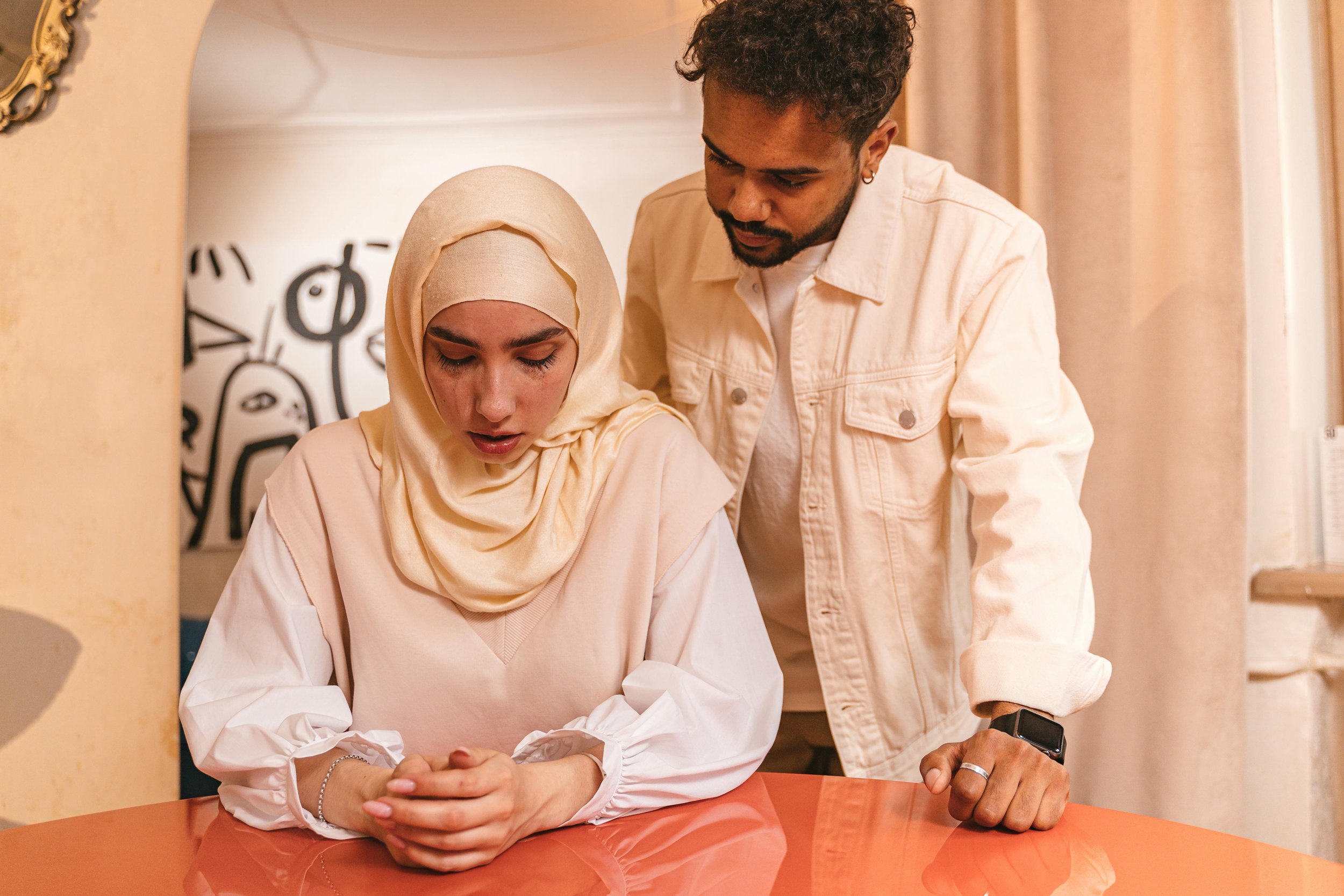
Every month that passes without a positive test is its own kind of grief. Every well-meaning comment about being patient, every question about when children are coming, every du'a that feels unanswered, adds another layer to a pain that Muslim couples are almost never given permission to acknowledge openly. Infertility and mental health in Muslim couples is a crisis hidden behind closed doors and polite smiles at family gatherings.
At Salam Space, we work with couples carrying this weight and know how much they need a space where the grief is real, the faith is respected, and neither has to be minimised for the other. This post is that space.
How Common Is Infertility and Why Does It Matter?
Infertility is far more common than most people realise. The World Health Organization estimates that roughly 1 in 6 people of reproductive age worldwide experience infertility, and an earlier, widely cited global analysis found 48.5 million couples were affected as of 2010, up from 42.0 million in 1990. In roughly one third of cases, the cause lies with the male partner. In another third, with the female. In the remaining third, either both partners are involved or no cause can be identified at all.
These numbers matter because infertility is still widely treated as a women's issue, a private shame, or a test of faith to be endured quietly. The reality is that it is a medical condition affecting both partners, with profound psychological consequences that rarely get the attention they deserve.
In Muslim communities specifically, where marriage and children are deeply intertwined with faith, family expectation, and social identity, the psychological weight of infertility is compounded in ways that most mainstream mental health resources are not equipped to address.
The Unique Grief of Infertility in Muslim Communities
Grief is the right word for what infertility brings. It is not just disappointment. It is a recurring, layered loss: the loss of the child you imagined, the loss of the version of your life you planned, the loss of a milestone that your entire community seems to reach effortlessly around you.
In Muslim communities, this grief carries additional weight. Children are spoken of in Islam as a gift from Allah, as a continuation of legacy, as a mercy. Couples who struggle to conceive are often surrounded by a community that, with the best of intentions, responds to their situation with phrases like 'make more du'a,' 'be patient, Allah has a plan,' or 'maybe it is a test of your faith.' These responses are not wrong in their intention. But they frequently communicate something harmful: that the grief should not be too visible, that enough faith would resolve the problem, and that struggling emotionally is somehow a failure of spiritual trust.
Muslim couples experiencing infertility and mental health challenges are not failing any test. They are grieving. And grief, in Islam, is permitted.
How Infertility Affects Mental Health
The mental health consequences of infertility are well documented and significant. A 2004 study of women in an assisted reproduction clinic in Taiwan found that over 40% met the diagnostic criteria for a common mental disorder, a rate significantly higher than the general population, a finding a 2024 cross-sectional study of infertile women in Saudi Arabia cites as part of the broader evidence base on this topic. Depression and anxiety are the most commonly reported, but the psychological impact extends further.
What infertility does to mental health, in concrete terms:
Anticipatory grief. Each cycle of treatment is a cycle of hope and potential loss. The emotional pattern of building hope and then having it collapse, repeatedly, is exhausting and cumulative. Over time, this can look like clinical depression.
Loss of identity and self-worth. For many Muslim women in particular, motherhood is deeply tied to identity. Being unable to conceive can produce a profound sense of failure or inadequacy that, left unaddressed, becomes a core wound.
Anxiety and hypervigilance. Tracking cycles, interpreting symptoms, monitoring test results. The constant surveillance of one's own body that infertility treatment requires is a significant source of anxiety, particularly when each result carries such high emotional stakes.
Social withdrawal. Baby showers, family gatherings, Eid celebrations surrounded by children, all of these become painful rather than joyful. Many couples struggling with infertility quietly withdraw from social life to protect themselves, which then feeds isolation and depression.
Spiritual distress. Feeling that du'as are not being answered. Wondering if Allah is withholding a child as punishment for something. Struggling to maintain trust in Allah's plan while experiencing profound grief. This spiritual dimension of infertility pain is real and deserves proper attention.
BOOK A SESSION
Ready to take the first step?
Confidential, culturally sensitive therapy — available online.
How Infertility Strains the Marriage
Infertility does not just affect individuals. It affects the marriage, often profoundly.
Couples who are trying to conceive frequently describe a shift in their relationship: intimacy becomes scheduled and functional rather than spontaneous and connected. Conversations revolve around treatment, timing, and results. Emotional responses to setbacks diverge, one partner grieving openly while the other copes by being practical, which can lead to each feeling unsupported and alone, the same kind of quiet, mutual withdrawal that defines emotional divorce in a marriage, even when neither partner intends it.
Male infertility carries its own layer of shame that is almost entirely unacknowledged in Muslim communities. A Muslim man whose infertility is the identified factor in a couple's struggle faces cultural messaging about masculinity and provision that makes the condition feel like a fundamental failure. He is less likely to speak about it, less likely to seek support, and more likely to internalise it as something shameful.
Without support, infertility can quietly become a source of distance in a marriage that was otherwise healthy. With the right support, couples navigating infertility and mental health challenges together often report that the experience, while painful, deepened their relationship rather than eroding it.

The Pressure That Nobody Talks About
The community pressure around childbearing in Muslim families is real and it is relentless.
Questions begin almost immediately after marriage. 'When are you going to have children?' is asked at family gatherings, at the mosque, by relatives who genuinely mean well. For a couple quietly struggling with infertility, each question is a small wound. The accumulation of those wounds across years is significant.
Many couples manage this pressure by not disclosing their situation at all, which means carrying the grief without community support, an isolation made worse by the broader stigma around mental health struggles in Muslim communities. Others disclose and receive responses that, though well-intentioned, add to the psychological burden. Very few receive the response that would actually help: acknowledgement of the grief, space for it to exist, and practical support without conditions.
The isolation that results from managing this pressure alone is one of the most important factors in why infertility and mental health in Muslim couples so frequently goes unaddressed until it has become a significant clinical concern.
What Islam Says About Infertility and Hope
The Quran speaks directly to the experience of couples who long for children and do not yet have them.
The story of Ibrahim, peace be upon him, and his wife Sarah, who conceived in old age, is one of the most well-known (Surah Adh-Dhariyat, 51:28-30). The story of Zakariyya, peace be upon him, who made du'a for a child when he and his wife were elderly, and was given Yahya, peace be upon him, is another (Surah Al-Anbiya, 21:89-90). These are not just historical accounts. They are offered as signs, as evidence of Allah's capacity to give what seems impossible, and as permission for the grief and longing that precedes that.
The Quran also acknowledges that children are not guaranteed: 'To Allah belongs the dominion of the heavens and the earth. He creates what He wills. He gives to whom He wills female children, and He gives to whom He wills males. Or He makes them both males and females, and He renders whom He wills barren. Indeed, He is Knowing and Competent.' (Surah Ash-Shura, 42:49-50).
This verse is profound. Allah names barrenness directly, matter-of-factly, alongside all the other possibilities. It is not a punishment. It is one of Allah's choices, made with knowledge and competence. For a Muslim couple navigating infertility, this verse can be both painful and deeply releasing. The pain is real. And it is held by a God who knows and who chose, not one who forgot or abandoned.
Navigating IVF and Assisted Reproduction Islamically
A practical question for many Muslim couples is where IVF and other forms of assisted reproduction stand within Islamic law. This is an area where Islamic scholarly opinion has developed significantly in recent decades.
The broad consensus among contemporary Islamic scholars is that IVF using the husband's sperm and the wife's egg, without third-party donation, is permissible. The couple remains the biological parents and the marital relationship is preserved. Surplus embryos and what to do with them is a more nuanced area that varies by scholarly opinion.
Third-party gamete donation, surrogacy, and similar arrangements are more contested, with many scholars considering them impermissible due to questions around lineage and the sanctity of the marital relationship. Couples considering these options are best served by consulting with knowledgeable Islamic scholars directly.
The important clinical point is that navigating these decisions carries its own psychological weight. Couples who are trying to conceive through assisted reproduction are managing not only the emotional rollercoaster of treatment but also questions of Islamic permissibility, family opinion, and the grief of each failed cycle. That is a very heavy load, and it deserves proper therapeutic support alongside religious guidance.
Infertility is one of the hardest journeys a couple can take. Salam Space offers a space where your grief is real, your faith is respected, and you do not have to choose between the two.
READY TO FEEL UNDERSTOOD?
Faith-centered therapy, personalized for your journey.
How Faith-Informed Therapy Helps
Effective therapeutic support for infertility and mental health in Muslim couples addresses both the individual and the relational, both the clinical and the spiritual. Salam Space offers this talk therapy virtually across Texas, with in-person sessions available in Austin and Houston for couples who prefer to meet in the same room.
Grief processing. Naming the losses clearly, the child not yet conceived, the milestones not yet reached, and giving those losses the weight they deserve. Muslim couples often need explicit permission to grieve in a community that tends to rush toward hope.
Couples communication work. Infertility frequently creates communication patterns that distance partners from each other. Therapy helps couples rebuild the emotional intimacy that treatment can erode, and learn to grieve together rather than separately.
Addressing spiritual distress. Working through the complex feelings about Allah, du'a, and trust that infertility inevitably raises. A faith-informed therapist can hold these questions without dismissing them or offering simplistic religious reassurances.
Supporting decision-making. When couples are navigating treatment decisions, including questions about assisted reproduction and Islamic permissibility, therapy can help them communicate clearly with each other and make decisions that both partners genuinely own.
Individual support. Sometimes one partner needs individual space to process grief, shame, or identity questions that they cannot yet bring into the couples room. Salam Space offers both individual and couples support.
Held, Not Forgotten
Infertility and mental health in Muslim couples is one of the most painful and least supported experiences in the Muslim community. The grief is real. The spiritual questions are real. The pressure is real. And the impact on individual wellbeing and on the marriage is real.
Islam does not ask couples to pretend they are fine. It offers stories of prophets who longed, who grieved, who waited, and who were eventually held. It names barrenness in the Quran without shame. It gives permission for grief alongside tawakkul.
If you and your partner are navigating this journey, you deserve support that understands both the clinical and the spiritual dimensions of what you are carrying. Salam Space is here to walk alongside you.
Frequently Asked Questions
Is it wrong to grieve infertility as a Muslim?
No. Islam permits grief. The Prophet, peace be upon him, wept openly for his son. Acknowledging loss honestly is not a failure of faith. It is a deeply human response that Islam has always made room for.
My husband will not talk about how he is feeling about our infertility. What do I do?
This is very common. Many Muslim men have no model for processing grief openly, particularly around something tied to masculinity. Couples therapy can create a structured space where both partners can speak without one carrying all the emotional weight.
Is IVF allowed in Islam?
IVF using the husband's sperm and wife's egg is considered permissible by the majority of contemporary Islamic scholars. More complex arrangements involving third-party donation are more contested. Consulting a knowledgeable scholar alongside your medical team is the most informed approach.
We have been trying for two years. At what point should we seek therapy?
There is no minimum threshold. If infertility is affecting your mental health, your relationship, or your spiritual wellbeing, those are sufficient reasons to seek support. You do not need to wait until you are in crisis.
Can therapy improve our chances of conceiving?
Research suggests that reducing psychological stress supports overall wellbeing during fertility treatment. While therapy is not a fertility treatment, the emotional relief it provides is genuinely valuable, regardless of outcome.
What if we eventually decide to stop treatment?
That is one of the most difficult decisions a couple can face, and it deserves proper support. Therapy can help couples reach that decision with clarity and mutual understanding, and process the grief that follows it.
How do I answer relatives who keep asking when we're having children?
You do not owe anyone your medical history. A brief, prepared response protects you without requiring an explanation: something like, 'We're not sharing updates on that right now, but thank you for thinking of us.' Having a script ready, and agreeing on it with your spouse in advance, takes the sting out of a question you know is coming.
