
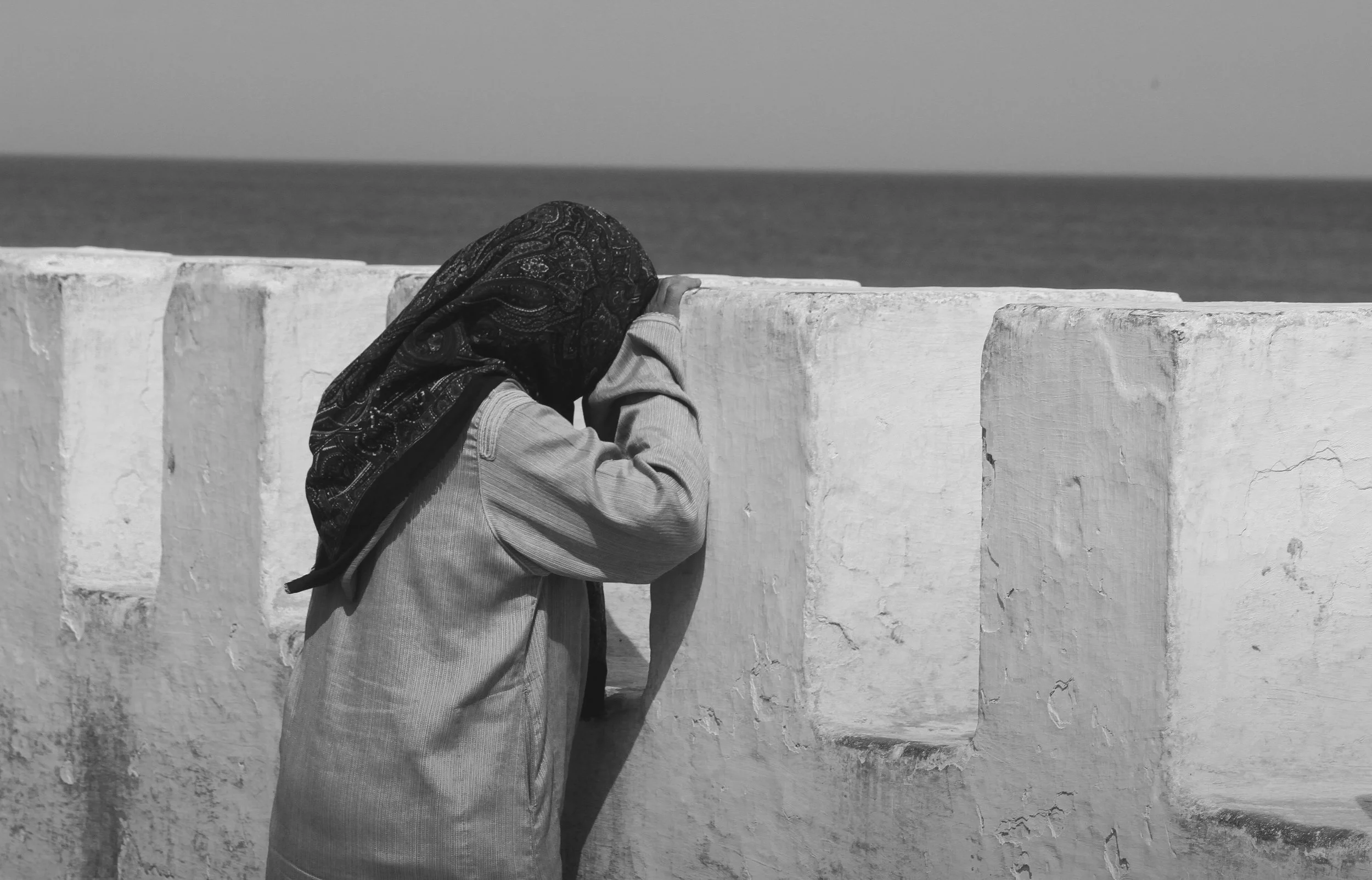
They pray in the same house. They eat together. They raise children together. But they have not had a real conversation in months. They do not fight much anymore, because fighting would require caring enough to engage. This is emotional divorce in Muslim marriages, and it is one of the most common and least talked about forms of marital breakdown in the community.
At Salam Space, we work with Muslim couples navigating exactly this, the quiet erosion of intimacy that leaves two people technically married but fundamentally alone. This post explains what emotional divorce is, why Muslim marriages are particularly vulnerable to it, and what can actually be done.
What Is Emotional Divorce?
Emotional divorce is not a legal term. It does not show up in a court filing or end with a signed document. It is the state of being married in every formal sense while being genuinely disconnected from your spouse at every emotional level.
Couples in emotional divorce are typically still cohabiting. They may still fulfill their functional roles, parenting together, managing finances, attending family events. But the emotional and intimate core of the marriage has gone cold. There is no real conversation. No vulnerability. No warmth. Often, there is no conflict either, because conflict requires engagement, and engagement has stopped.
For many Muslim couples, emotional divorce can persist for years, sometimes decades, because the barriers to formal divorce are high and the pressure to maintain the appearance of a functioning marriage is significant.
One Muslim mental health clinician, writing about the pattern she saw again and again in her own practice, has described Muslim men and women who were intensely dissatisfied in their relationships as choosing to either stay together in misery or separate entirely, with very little explored in between. Emotional divorce is what living in that misery often looks like.
Why Muslim Marriages Are Particularly Vulnerable
There is nothing about Islam that makes emotional divorce inevitable in Muslim marriages. But there are cultural and social factors common in many Muslim communities that create the conditions for it.
Marriages built on function rather than connection. In many Muslim families, marriage is approached primarily as a practical and religious institution. Compatibility is assessed through family background, education, and religiosity. Emotional intimacy, shared values about communication, and the ability to be vulnerable with one another are rarely part of the conversation. The foundation is solid on paper but shaky where it actually counts.
No model for what a healthy marriage looks like. Many Muslim adults grew up in households where their parents' marriage was either unhappy and silent or unhappy and loud. They never saw two people navigating conflict well, repairing after arguments, or expressing affection. They are now trying to build something they have never witnessed, and often carrying other unprocessed weight from those same households into adulthood.
Stigma around seeking help. Muslim couples often wait until a marriage is in serious crisis before reaching out for support, partly because seeking couples therapy is still seen in many communities as an admission of failure, the same stigma that keeps individuals from seeking help for their own mental health. By the time they come to therapy, the emotional distance has often been growing for years.
Gender role rigidity. In some Muslim marriages, rigid and culturally enforced expectations around gender roles mean that husbands and wives occupy entirely separate spheres of life. The husband manages externally. The wife manages internally. They rarely occupy the same emotional space. Connection requires proximity, and proximity has been structurally removed.
The pressure to stay together at all costs. The stigma of divorce in many Muslim communities is real. Couples who are fundamentally incompatible or deeply unhappy often stay married not out of genuine commitment but out of fear of community judgment, family pressure, or concern for children. Staying in a marriage without working on it is exactly how emotional divorce deepens.
How Emotional Divorce Happens Gradually
Emotional divorce in Muslim marriages rarely happens overnight. It is usually the result of many small moments of disconnection that were never repaired.
A conflict that was never resolved. A bid for connection that went unnoticed. A moment of vulnerability that was met with dismissal. A need that was expressed and ignored. Individually, none of these moments is catastrophic. But they accumulate. And each one that goes unrepaired makes the next repair slightly harder.
Researcher John Gottman, who has studied couples extensively for decades, identified that it is not the presence of conflict but the absence of repair that destroys marriages. Muslim couples are not immune to this dynamic. In fact, in cultures where conflict avoidance is valued and emotional expression is discouraged, the accumulation of unrepaired disconnection can be particularly severe.
Eventually, one or both partners stops trying. The wall between them stops feeling like a temporary barrier and starts feeling like a permanent feature of the marriage. At that point, emotional divorce has settled in.
Signs You Are in an Emotionally Divorced Marriage
Some of these signs are obvious. Others are easy to rationalise as simply being busy or tired. Take an honest look:
You and your spouse rarely have conversations that are not about logistics: children, finances, schedules.
You feel lonely inside your marriage, sometimes more lonely than you would feel alone.
Physical intimacy has significantly decreased or stopped entirely.
You no longer share your inner life with your spouse: your worries, your dreams, your disappointments.
You have stopped expecting things to get better and have quietly adjusted to a marriage that is functional but empty.
You feel more yourself with friends or colleagues than with your spouse.
The thought of your marriage continuing exactly as it is for the next twenty years feels unbearable.
You find yourself looking at other couples with envy, not for their circumstances but for the way they seem to actually like each other.
If several of these resonate, you are not in a normal rough patch. You are in an emotionally divorced marriage, and that is worth addressing directly.
BOOK A SESSION
Ready to take the first step?
Confidential, culturally sensitive therapy — available online.
What Islam Says About Intimacy and Connection in Marriage
Islam does not describe marriage as a purely functional arrangement. The Quran describes spouses as garments for one another:
‘They are a garment for you and you are a garment for them.’ (Surah Al-Baqarah, 2:187).
The Arabic metaphor is of closeness, protection, warmth, and covering. It is inherently intimate.
The Prophet Muhammad, peace be upon him, was known for his tenderness toward his wives. He helped with household tasks. He raced with Aisha, may Allah be pleased with her (Sunan Abi Dawud 2578). He said that the best of you are those who are best to their families (Jami‘ at-Tirmidhi 3895). Islamic marriage is not simply a contract of rights and duties. It is a relationship of mercy and affection, described in the Quran as a sign among Allah's signs.
An emotionally divorced marriage falls short of this standard. Not because either partner is a bad Muslim, but because no one taught them how to build the kind of connection that Islam describes. That is a skill gap, not a character flaw. And skill gaps can be addressed.
Can an Emotionally Divorced Marriage Be Saved?
Yes. With the right support and genuine willingness from both partners, marriages that have been emotionally distant for years can be meaningfully restored.
The critical factor is not how long the disconnection has lasted. It is whether both people are willing to do something different. A marriage where one partner has completely shut down and has no interest in change is harder to work with. But many couples who present to therapy having described their marriage as dead discover that underneath the distance there is still something worth recovering.
A 2014 ISPU report compiling two separate studies put divorce rates in the Muslim American community somewhere between 21 and 32 percent, suggesting a meaningful minority of Muslim marriages do end in divorce even as most stay legally intact. Worth noting honestly: ISPU's own more recent 2020 survey found a considerably lower 6 percent of American Muslims currently divorced, versus 11 percent of the general public. The two figures likely measure different things, how many marriages have ever ended versus how many people are divorced at any given moment, so the fair read is that the picture is mixed, not that one number is the final word. But staying intact and being genuinely connected are not the same thing. The goal of couples therapy is not just to prevent divorce. It is to build the kind of marriage that both partners actually want to be in.
How Couples Therapy Helps
Couples therapy for emotional divorce in Muslim marriages works best when it combines clinical expertise with a genuine understanding of Islamic values and the cultural context the couple is living in. Salam Space offers this talk therapy virtually across Texas, with in-person sessions available in Austin and Houston for couples who prefer to meet in the same room.
In practice, effective therapy for emotionally disconnected Muslim couples typically involves:
Creating safety for honest communication. Many emotionally divorced couples have stopped being honest with each other, not out of dishonesty but out of self-protection. Therapy creates a structured, safe environment where both partners can begin to say what they have not been able to say.
Identifying the patterns. Most emotionally divorced couples are caught in repeating cycles: one partner pursues, the other withdraws. Or both withdraw. A therapist helps couples see the cycle clearly so they can interrupt it.
Rebuilding emotional bids and responses. Gottman's research identifies small moments of connection, bids for emotional engagement, as the building blocks of intimacy. Couples therapy helps partners learn to notice and respond to these bids again.
Addressing underlying individual issues. Sometimes emotional divorce in a marriage is connected to one partner's unresolved mental health struggles, unprocessed trauma, or patterns from their family of origin. Individual therapy alongside couples work can be necessary.
Reconnecting within an Islamic framework. A faith-informed therapist helps couples reconnect not just as partners but as spouses whose marriage is an act of worship, a relationship with rights and responsibilities that Islam has described with precision and compassion.
Not Beyond Reach
Emotional divorce in Muslim marriages is common, painful, and far more recoverable than most couples believe when they are in the middle of it. The distance that has built up over years does not have to be permanent. The connection that once existed, or the connection that never quite developed but was always possible, is not beyond reach.
Islam describes the marital relationship as one of Allah's signs, a source of tranquility and mercy. That is what a marriage can be. And for couples willing to do the work, with the right support, it is what their marriage can become.
Salam Space is here to walk that journey with you.
READY TO FEEL UNDERSTOOD?
Faith-centered therapy, personalized for your journey.
Frequently Asked Questions
Is emotional divorce the same as falling out of love?
Not exactly. Emotional divorce is a state of disconnection that can develop in marriages where love was once present, or in marriages where deep connection was never fully established. It is not primarily about feelings. It is about the structural absence of intimacy, communication, and emotional engagement.
Can emotional divorce happen even in a marriage with no conflict?
Yes, and it often does. Some of the most emotionally divorced couples are those who never fight. The absence of conflict is not always a sign of health. It can be a sign that both partners have stopped caring enough to engage.
Is seeking couples therapy un-Islamic?
No. Islam encourages seeking help and resolution. The Quran even describes a process of appointing mediators when marital conflict cannot be resolved between spouses directly. Professional therapy is a contemporary form of exactly that kind of supported resolution.
What if my spouse refuses to come to therapy?
Individual therapy is still valuable. Understanding your own patterns, needs, and responses can shift the dynamic in a marriage even when only one partner is in therapy. Sometimes one partner's change creates enough shift in the system that the other becomes willing to engage.
How long does couples therapy take?
It varies depending on how long the disconnection has been developing and what both partners are willing to do. Some couples see meaningful change within a few months. Others need longer. The goal is not speed. It is genuine, sustainable reconnection.
What if we decide the marriage cannot be saved?
Therapy can also help couples navigate that decision with clarity, dignity, and respect, particularly when children are involved. Ending a marriage well is also something a good therapist can support.
Is emotional divorce the same as having an emotional affair?
No, though they can be related. An emotional affair is when one partner redirects the emotional intimacy, attention, and vulnerability that used to go to their spouse toward someone outside the marriage. Emotional divorce is different: it is a mutual, internal withdrawal, both partners still there, but neither one investing in the connection anymore. That said, a marriage in emotional divorce is more vulnerable to one partner eventually seeking that connection elsewhere, which is one more reason to address the disconnection directly rather than let it continue.
